-
By:
- jayson
- No comment
acuvue moist multifocal fitting guide
Acuvue Moist Multifocal Fitting Guide: A Comprehensive Overview (Updated 04/07/2026)
Johnson & Johnson Vision continually expands ACUVUE parameters, including multifocal and astigmatism options, offering practitioners advanced tools for presbyopic patients.
Acuvue Moist Multifocal contact lenses represent a significant advancement in vision correction for individuals experiencing presbyopia – the age-related loss of near vision; Launched in 2015, these lenses were the first daily disposable multifocal contact lenses available, revolutionizing the fitting process and patient comfort.
Designed with Johnson & Johnson’s innovative Pupil Optimised Design, Acuvue Moist Multifocal lenses feature a unique aspheric design that provides smooth vision transitions between distance, intermediate, and near. This technology aims to deliver clear vision at all focal points, regardless of pupil size variations. The lenses utilize Lacreon® technology to maintain moisture for all-day comfort, crucial for presbyopic patients often experiencing dry eye.
These daily disposables prioritize hygiene and convenience, minimizing protein build-up and reducing the risk of infection. They are a compelling option for patients seeking a comfortable, healthy, and effective solution to presbyopia.
Understanding Presbyopia and Multifocal Contact Lenses
Presbyopia, a natural part of aging, typically begins around age 40, causing difficulty focusing on near objects. This occurs as the eye’s lens loses flexibility, hindering its ability to change shape for close-up vision. Symptoms include blurry vision at normal reading distances and a need to hold materials further away.

Multifocal contact lenses address presbyopia by incorporating multiple power zones into a single lens. These zones provide clear vision at distance, intermediate, and near, eliminating the need for reading glasses. Unlike single-vision lenses, multifocals offer a continuous range of vision;
Acuvue Moist Multifocal lenses utilize this principle with their Pupil Optimised Design, ensuring optimal vision across all distances. Understanding the physiological changes of presbyopia and the mechanics of multifocal lens design is crucial for successful fitting and patient satisfaction.
Patient Assessment & Selection
Thorough evaluation of patient needs, lifestyle, and ocular health is paramount for successful Acuvue Moist Multifocal lens fitting and optimal visual outcomes.
Identifying Suitable Candidates for Acuvue Moist Multifocal
Ideal candidates exhibit presbyopia, typically emerging around age 40, experiencing difficulty with near vision tasks like reading. A comprehensive assessment should determine if their visual needs align with the benefits of a multifocal lens. Patients motivated to correct their vision with contacts, and demonstrating sufficient manual dexterity for insertion and removal, are strong contenders.
Those with stable refractive error and healthy corneas are generally well-suited. However, individuals with certain ocular surface diseases or significant dry eye may require careful consideration and potentially benefit from alternative solutions. Ruling out contraindications, and understanding patient expectations, are crucial steps in the selection process. Prior successful contact lens wear is a positive indicator, but not essential.
Comprehensive Eye Examination Protocol
A thorough examination begins with a detailed patient history, including lifestyle and visual demands. Refraction, encompassing distance and near vision, is paramount, alongside assessment of accommodation and binocular vision. Corneal topography maps the corneal surface, identifying irregularities. Pupil size measurements, in varying light conditions, are vital for multifocal lens selection.
Tear film assessment, including Schirmer’s test and tear breakup time, evaluates ocular surface health. Gonioscopy assesses the anterior chamber angle. A dilated fundus examination evaluates the retina and optic nerve. Documenting these findings ensures a complete record and informs appropriate lens selection and fitting strategies, maximizing patient comfort and visual acuity.
Refraction Techniques for Presbyopic Patients
Traditional distance refraction establishes the starting point, followed by a monocular near addition to determine the initial ADD power. Dynamic retinoscopy assesses accommodative responses, crucial for accurate near correction. Binocular balancing is essential, refining refraction for comfortable near and intermediate vision.
Consider using plus-add refinement techniques, gradually increasing the ADD power until optimal near vision is achieved without compromising distance clarity. Employing subjective techniques like the modified Donder’s chart helps pinpoint the ideal near correction. Thoroughly document all refraction findings, including best spectacle correction and monocular ADD, to guide multifocal contact lens selection.

Acuvue Moist Multifocal Lens Parameters
ACUVUE MOIST Multifocal lenses offer a range of powers, base curves, and ADD values, continually expanding to meet diverse patient needs and prescriptions.
Available Powers and Base Curves
Acuvue Moist Multifocal contact lenses are designed to address the visual needs of presbyopic patients, offering a comprehensive range of spherical powers to accommodate a wide spectrum of prescriptions. The available power range typically spans from +0.50D to +6.00D, in 0.25D steps, ensuring precise correction for individual visual requirements.
Furthermore, these lenses are available in multiple base curves, commonly 8.5mm and 9.0mm, allowing for optimized lens-to-cornea fit and enhanced comfort. Selecting the appropriate base curve is crucial for achieving optimal vision and minimizing potential complications. Practitioners should carefully consider the patient’s corneal curvature when determining the ideal base curve for a successful fit. Johnson & Johnson Vision frequently updates and expands these parameters to better serve a growing patient base.
Diameter and Material Specifications
Acuvue Moist Multifocal lenses maintain a consistent diameter of 14.2mm, designed to comfortably fit a broad range of patients. This standardized diameter contributes to predictable fitting outcomes and simplifies the adaptation process. The lenses are crafted from Narafilcon A, a highly breathable silicone hydrogel material, ensuring ample oxygen transmission to the cornea.
This material composition promotes excellent eye health, even with extended wear. The water content of approximately 58% contributes to lens hydration and comfort throughout the day. Narafilcon A’s inherent wettability minimizes friction and dryness, enhancing wearing comfort; Johnson & Johnson Vision prioritizes biocompatibility and comfort in their material selection, resulting in a lens well-tolerated by many patients.
ADD Power Selection Guidelines
Acuvue Moist Multifocal ADD power selection requires careful consideration of the patient’s near vision demands and binocularity. Start with a low ADD power (+0.75D to +1.00D) for initial trials, particularly for patients new to multifocal lenses. A monocular fitting approach is recommended, assessing each eye independently.
Consider the patient’s lifestyle; those with extensive near work may benefit from a higher ADD power. Over-minusing distance correction can sometimes reduce the required ADD. Thorough subjective refinement is crucial, evaluating both distance and near vision at various working distances. Remember to account for accommodative lag and fusion abilities during the fitting process, optimizing visual clarity and comfort.
Fitting Process: Step-by-Step Guide
Begin with refraction, select trial lenses based on parameters, evaluate vision subjectively, and refine the fit for optimal distance and near acuity.
Initial Lens Selection Based on Refraction
Begin the fitting process with a comprehensive refraction, carefully documenting both distance and near corrections. Utilize established techniques to determine the best spectacle equivalent for multifocal contact lens consideration. Consider the patient’s lifestyle and visual demands when interpreting refraction results; active individuals may require different solutions than those primarily focused on near tasks.
Acuvue Moist Multifocal lenses require careful ADD power selection. Start with the patient’s existing near add, or estimate based on age-related presbyopia. Utilize a trial lens fitting set to evaluate different ADD powers and optimize visual performance. Remember that a slight over-minus refraction is often preferred for near vision with multifocal lenses, promoting comfortable reading distances.
Document all refraction findings and initial lens selections meticulously. This detailed record will serve as a valuable reference point throughout the fitting process and for future adjustments.
Trial Lens Fitting and Evaluation
Dispense a trial pair of Acuvue Moist Multifocal lenses based on the initial refraction and ADD power selection. Emphasize proper handling and insertion techniques to the patient, ensuring comfort and minimizing complications. Allow sufficient adaptation time – typically one to two weeks – for the patient to experience the lenses in various lighting and visual conditions.
Evaluate vision at distance, intermediate, and near, asking specific questions about clarity, comfort, and any visual disturbances. Utilize a standardized questionnaire to objectively assess patient responses. Pay close attention to reports of glare, halos, or fluctuating vision, which may indicate an improper fit.
Assess lens centration, movement, and corneal health. A well-centered lens is crucial for optimal visual performance. Document all findings thoroughly to guide further refinement.
Subjective Refinement Techniques
Refine the prescription based on the patient’s subjective responses during the trial period. Small adjustments to ADD power (±0.25D) can significantly impact near and intermediate vision. Consider over-minus refinement for near vision complaints and over-plus for distance issues.
Utilize monocular and binocular refinement techniques. Assess each eye individually, then evaluate binocular vision to ensure optimal balance and comfort. Employ dynamic refraction, simulating real-life viewing distances, to fine-tune the prescription.
Explore lens exchange strategies – switching the ADD power between eyes – to optimize performance. Document all changes and encourage patient feedback throughout the refinement process, aiming for clear vision at all distances.

Troubleshooting Common Fitting Challenges
Addressing vision issues requires careful assessment; distance, intermediate, and near complaints often necessitate ADD power or parameter adjustments for optimal clarity.
Addressing Distance Vision Complaints
When patients report blurry distance vision with Acuvue Moist Multifocal lenses, several factors should be investigated. First, confirm accurate refraction, as under-minus or under-plus prescriptions are common culprits. Evaluate the ADD power; a higher ADD can sometimes compromise distance acuity. Consider reducing the ADD power by 0.25D increments during subsequent fittings.
Lens centration is crucial – decentration can induce aberrations affecting distance clarity. Assess the lens fit for proper positioning on the cornea. If necessary, explore alternative base curves or diameters. Furthermore, rule out corneal irregularities or dry eye, as these conditions can exacerbate visual disturbances. A thorough case history and slit-lamp examination are essential for accurate diagnosis and effective resolution.
Resolving Intermediate Vision Issues
Intermediate vision challenges with Acuvue Moist Multifocal lenses often stem from insufficient ADD power or improper lens design. Begin by verifying the patient’s intermediate distance needs – computer work, driving, etc. – and adjust the ADD power accordingly, potentially increasing it in 0.25D steps. Ensure the lens design adequately supports the required intermediate distance.
Consider the pupil size during intermediate viewing; the lens’s intermediate zone must align with the pupil. If issues persist, evaluate the lens fit and centration. A slight plus refinement may improve intermediate clarity, but avoid over-minusing, which can compromise distance vision. Thorough patient questioning about specific tasks and visual demands is vital for successful resolution.
Managing Near Vision Difficulties
Near vision complaints with Acuvue Moist Multifocal lenses frequently relate to inadequate ADD power or an incorrect lens design for the patient’s reading distance. A small increase in ADD power (0.25D increments) is often the first step, carefully monitoring distance vision impact. Confirm the patient’s typical reading distance and ensure the lens’s near zone adequately supports it.
If difficulties persist, assess lens centration and fit. A slight minus refinement can sometimes enhance near acuity, but avoid over-correcting, potentially affecting intermediate and distance clarity. Patient feedback regarding specific reading tasks – font size, lighting – is crucial. Consider a different lens design if adjustments prove ineffective, prioritizing comfortable and clear near vision.

Lens Care and Patient Education
Proper handling, cleaning with recommended solutions, and adherence to the prescribed wearing schedule are vital for comfort, vision, and ocular health.
Proper Handling and Insertion Techniques
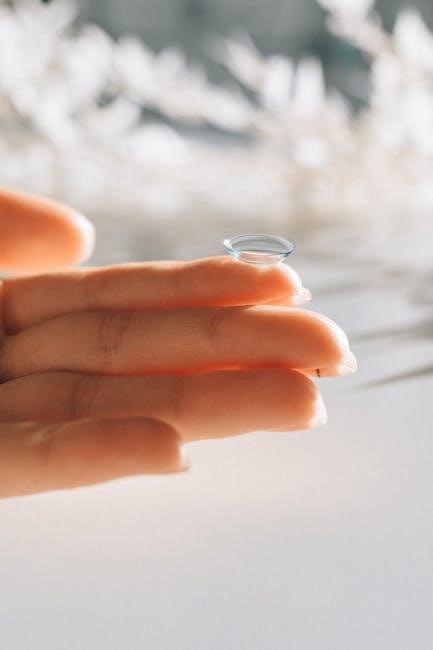
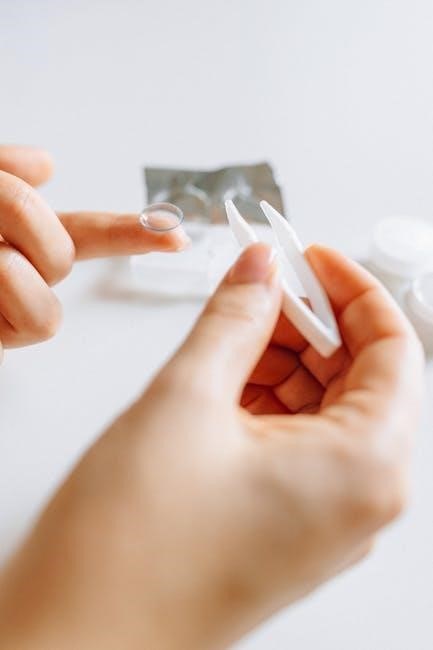
Acuvue Moist Multifocal lenses require careful handling to maintain their integrity and ensure patient comfort. Emphasize washing and thoroughly drying hands before any lens manipulation to prevent contamination. Demonstrate the proper technique for removing the lens from the blister pack, avoiding damage to the delicate multifocal design.
Instruct patients to confirm the lens is not inside-out – a correctly oriented lens will appear rounded, while an inverted lens will resemble a bowl. Guide them through the insertion process, using the recommended “pinch” method, and ensuring the lens fully opens on the eye. Remind patients to avoid using fingernails, which can tear the lens material.
Stress the importance of regular hand hygiene and gentle handling to maximize lens lifespan and minimize discomfort.
Cleaning and Disinfection Recommendations
Acuvue Moist Multifocal lenses are designed for daily disposable wear, eliminating the need for routine cleaning and disinfection. However, patients should be educated on proper handling even with daily disposables. If a lens is accidentally dropped or exposed to non-sterile water, it must be discarded immediately – do not attempt to clean or reuse it.
For patients who occasionally wear the lenses for extended periods (under professional guidance), recommend a multipurpose solution specifically approved for silicone hydrogel materials. Emphasize the importance of rubbing the lens surface gently to remove deposits, followed by thorough rinsing and disinfection.
Never use tap water, saliva, or homemade solutions for cleaning or storing lenses, as these can introduce harmful microorganisms.
Wearing Schedule and Compliance
Acuvue Moist Multifocal lenses are primarily designed as daily disposable lenses, promoting optimal comfort and hygiene. Patients should be instructed to discard the lenses after each use and wear a fresh pair daily. Adherence to this schedule minimizes deposit buildup and reduces the risk of infection.
Discuss the importance of following the prescribed wearing schedule determined during the fitting process. Extended or overnight wear should only be considered under strict professional supervision and with appropriate patient education.
Emphasize the need for consistent compliance with lens wear guidelines to maintain ocular health and maximize visual performance. Regular follow-up appointments are crucial to monitor lens fit and patient comfort.
Advanced Fitting Considerations
Acuvue Moist Multifocal fitting requires nuanced approaches for post-refractive surgery, astigmatism, and dry eye patients, demanding careful assessment and tailored solutions.
Fitting Post-Refractive Surgery Patients
Fitting multifocal contact lenses on patients post-refractive surgery presents unique challenges due to altered corneal topography and potentially reduced corneal sensitivity. A thorough understanding of the patient’s refractive history, including the type of prior surgery (LASIK, PRK, etc.), is crucial.
Corneal ectasia risk should be carefully evaluated. Initial lens selection often requires a steeper base curve to optimize fit and minimize decentration. Consider utilizing diagnostic sets to precisely map the corneal surface and identify the optimal lens parameters.
Patients may experience increased glare or halos, necessitating careful refraction and potentially a modified ADD power. Frequent follow-up appointments are essential to monitor comfort, vision, and corneal health, adjusting parameters as needed to achieve optimal visual outcomes and patient satisfaction.
Managing Astigmatism with Multifocal Lenses
Successfully fitting Acuvue Moist Multifocal lenses on patients with astigmatism requires careful consideration of both the refractive error and the corneal toricity. Utilizing toric multifocal lenses, like the 1-DAY ACUVUE® MOIST® for ASTIGMATISM, is paramount. Accurate refraction, including keratometry readings, is essential to determine the appropriate lens power and axis.
Diagnostic fitting sets are invaluable for optimizing lens orientation and minimizing rotational movement. Pay close attention to patient reports of clarity at all distances, and assess for any induced astigmatism or aberrations.
Stabilization mechanisms within the lens design help maintain consistent vision. Frequent follow-ups are crucial to refine the fit and ensure long-term comfort and visual performance.
Special Considerations for Dry Eye Patients
Presbyopic patients often experience increased dry eye symptoms, making Acuvue Moist Multifocal lens fitting more challenging. The lens material’s inherent wettability is crucial; Acuvue Moist utilizes a hydration-rich design to enhance comfort. Thoroughly assess tear film quality and quantity before initiating a multifocal fitting.
Consider recommending lubricating eye drops or punctal plugs to optimize the ocular surface. Monitor for signs of lens dryness or discomfort during the trial period. Reduced wearing time or a switch to a different lens material may be necessary.
Emphasize proper lens care and hygiene to minimize irritation and maintain lens wettability.

Johnson & Johnson Vision Resources
Johnson & Johnson Vision provides comprehensive fitting tools, software, professional support, and training programs to ensure successful ACUVUE multifocal lens fittings.
Available Fitting Tools and Software
Johnson & Johnson Vision offers a suite of resources designed to streamline the ACUVUE Moist Multifocal fitting process. Practitioners can leverage the ACUVUE fitting software, which incorporates advanced algorithms to predict initial lens parameters based on patient refraction data and lifestyle needs. This software assists in determining appropriate ADD powers and lens designs for optimal vision correction.
Furthermore, interactive fitting guides and online resources provide detailed guidance on patient selection, troubleshooting common fitting challenges, and maximizing patient satisfaction. Access to case studies and clinical data supports informed decision-making. The company also frequently updates these tools to reflect parameter expansions, such as those seen with 1-DAY ACUVUE MOIST for ASTIGMATISM, ensuring practitioners have the latest information at their fingertips.
Professional Support and Training Programs
Johnson & Johnson Vision is committed to supporting eye care professionals with comprehensive training programs focused on ACUVUE Moist Multifocal lenses. These programs encompass live workshops, webinars, and online modules, covering everything from presbyopia assessment to advanced fitting techniques; The initial launch of the multifocal lens was supported by a series of successful events nationwide, enabling hands-on experience.
Dedicated vision care specialists provide personalized support, assisting with complex cases and troubleshooting fitting challenges. Continuing education credits are often available through these programs, ensuring practitioners remain up-to-date with the latest advancements. Resources also detail new parameter expansions, like those for 1-DAY ACUVUE MOIST for ASTIGMATISM, fostering confident and successful fittings.
Latest Updates and Parameter Expansions (e.g., 1-DAY ACUVUE MOIST for ASTIGMATISM)
Johnson & Johnson Vision consistently expands the ACUVUE family, demonstrating a commitment to meeting diverse patient needs. Notably, parameters for 1-DAY ACUVUE MOIST Brand Contact Lenses for ASTIGMATISM were expanded in the U.S. in January 2018, offering greater fitting flexibility. This expansion reflects ongoing research and development aimed at improving visual outcomes.
Furthermore, the Acuvue Oasys Multifocal lens with Pupil Optimised Design received CE Mark approval in Europe earlier, showcasing international advancements. Practitioners should regularly check for updates regarding new power ranges, base curves, and material specifications to optimize patient comfort and vision. Staying informed ensures access to the most current fitting solutions.